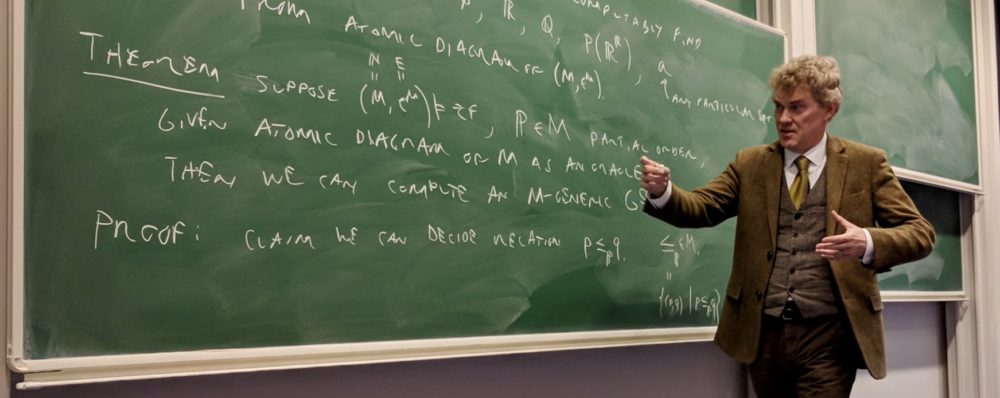
I have been asked by the ASL to fill in as a last-minute substitute speaker for the ASL session at the upcoming 2026 APA Central Division Meeting in Chicago, February 18-21, 2026, due to a late cancellation of one of the plenary speakers, James Walsh, who regrettably is unable to speak. My talk will be part of the Wednesday evening ASL session 6-7:50.
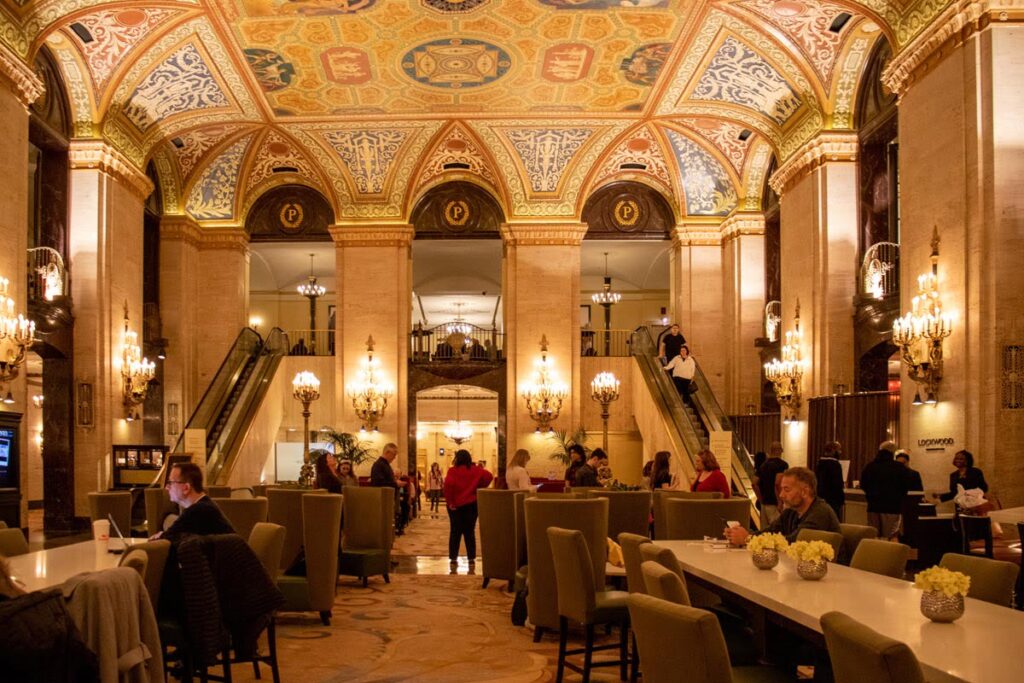
Please join me in Chicago at the elegant Palmer House hotel—we have a great lineup of talks.

Title: Mathematicians do not agree on the essential structure of the complex numbers
Abstract: What is the essential structure of the complex numbers? Mathematicians, it turns out, do not generally agree—indeed one can find sharply worded disagreements. Do we have a purely algebraic conception of the complex numbers, taking it as an algebraically closed field with only its algebraic structure? Or do we have an analytic view, as a field over the real numbers, distinguished as a particular subfield? Or should we have a topological view? Perhaps we have a rigid conception of the complex plane, with the coordinate structure of real and imaginary parts. Many mathematicians find it fundamentally wrong to break the symmetry between i and -i, and indeed the various perspectives give rise to fundamentally different understandings of the automorphism group, and they are not all fully bi-interpretable nor even mutually interpretable. I shall place the whole discussion into the context of the philosophy of structuralism and the question of what is a number.
This talk is based on my essay of the same title:
- Joel David Hamkins, Mathematicians do not agree on the essential structure of the complex numbers, Infinitely More, November 2024.