Skip to primary content
Skip to secondary content

Joel David Hamkins

mathematics and philosophy of the infinite

Joel David Hamkins

Main menu

  • Home
    • About
    • My Curriculum Vita
    • Contact
    • Comment Board
  • Publications
    • Publication list
    • Recent publications
    • Publications by topic
      • Automorphism towers
      • Infinitary computability
      • Infinitary utilitarianism
      • Large cardinals
    • My Research Collaborators
  • Talks
    • Talks
    • Recent and Upcoming Talks
    • Videos
  • Appointments and Grants
    • About Me
    • My Academic Appointments
    • Grants and Awards
  • Teaching
    • About My Courses
  • Students
    • About My Graduate Students
    • List of My Graduate Students
  • Mathematical Shorts
  • Math for Kids

Tag Archives: Newton

How the continuum hypothesis could have been a fundamental axiom

Posted on July 3, 2024 by Joel David Hamkins
27

Joel David Hamkins, “How the continuum hypothesis could have been a fundamental axiom,” Journal for the Philosophy of Mathematics (2024), DOI:10.36253/jpm-2936, arxiv:2407.02463.
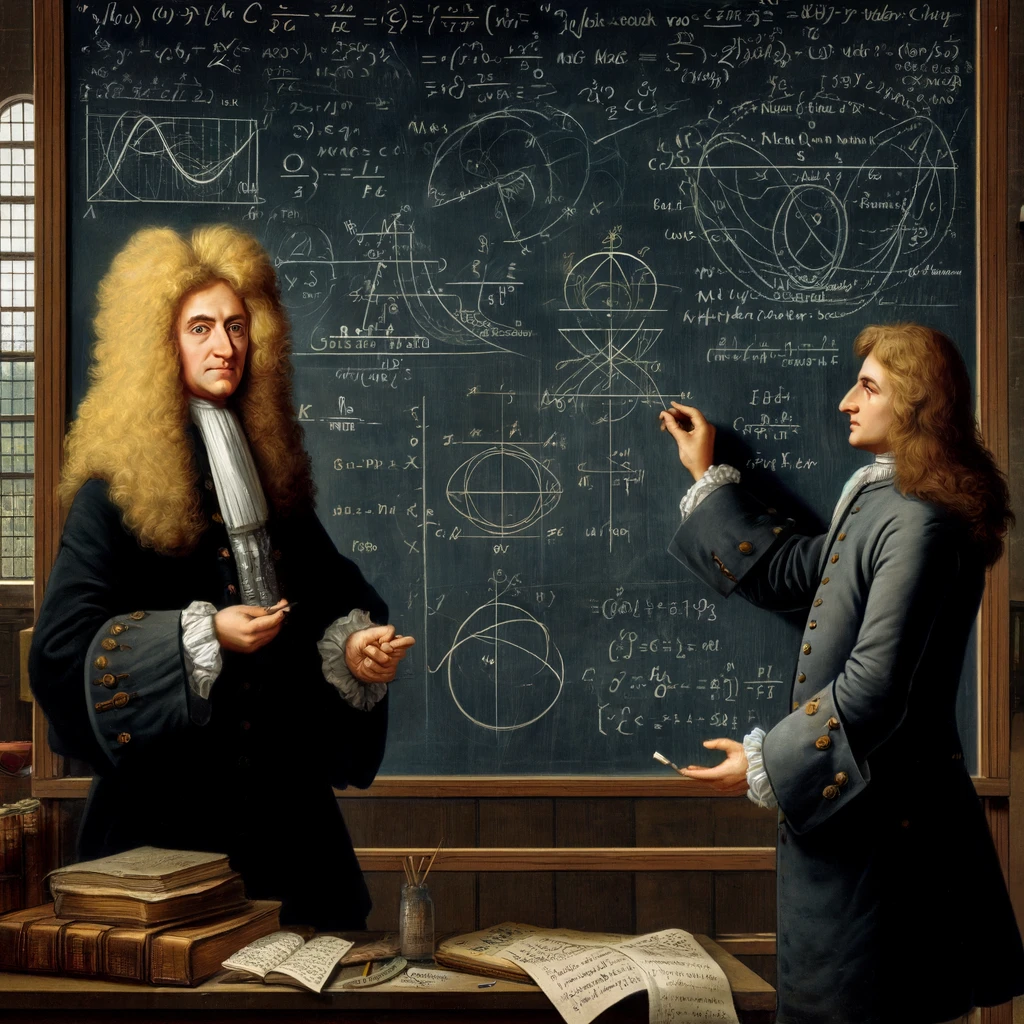
Abstract. I describe a simple historical thought experiment showing how we might have come to view the continuum hypothesis as a fundamental axiom, one necessary for mathematics, indispensable even for calculus.

See also this talk I gave on the topic at the University of Oslo:

  • How the continuum hypothesis could have been a fundamental axiom, Oslo
Slides-CH-could-have-been-fundamental-Hamkins-Oslo-June-2024-1Download

Share:

  • Share on X (Opens in new window) X
  • Share on Facebook (Opens in new window) Facebook
  • Share on Reddit (Opens in new window) Reddit
  • Share on WhatsApp (Opens in new window) WhatsApp
  • Email a link to a friend (Opens in new window) Email
  • Print (Opens in new window) Print
  • More
  • Share on LinkedIn (Opens in new window) LinkedIn
  • Share on Tumblr (Opens in new window) Tumblr
  • Share on Pocket (Opens in new window) Pocket
  • Share on Pinterest (Opens in new window) Pinterest
Posted in Publications | Tagged categoricity, CH, continuum hypothesis, hyperreal numbers, Leibniz, Newton, thought experiment | 27 Replies

Infinitely More

Proof and the Art of Mathematics, MIT Press, 2020

Buy Me a Coffee

Recent Comments

  • Joel David Hamkins on Comment Board
  • Pedro on Comment Board
  • Ember on Discussion of McCallum’s paper on Reinhardt cardinals in ZF
  • LANG on Discussion of McCallum’s paper on Reinhardt cardinals in ZF
  • Joel David Hamkins on Cheryl’s Rational Gifts: transfinite epistemic logic puzzle challenge!

JDH on Twitter

My Tweets

RSS Mathoverflow activity

  • Comment by Joel David Hamkins on Representation of μ-recursive functions
    After more than a decade, I have decided to change this back to "founders," which indeed expresses my original meaning.
  • Comment by Joel David Hamkins on Peano axioms— mathematical induction and other axioms
    I think of these as the Dedekind axioms, rather than the Peano axioms. Peano gave a very successful account of how to develop elementary number theory based on the Dedekind axioms, but the axioms, as well the accompanying categoricity theorem, are due to Dedekind, as Peano acknowledges.
  • Comment by Joel David Hamkins on Closed connected subset of a connected set
    I had meant that $A$ included the limit point, so it is closed.
  • Comment by Joel David Hamkins on Can a Hamkins infinite time Turing Machine with infinite Super Turing jumps (from higher type oracles) get the power to decide $\Sigma_1^2$ sets?
    @aznek Every ITTM computation either halts at some countable ordinal stage or enters a repeating loop of computation at a countable ordinal, so one never needs uncountable ordinals for these computations. Some people, not me, find it easier to conceive of infinite computations when they take place in a finite amount of real time, and […]
  • Comment by Joel David Hamkins on Are there large cardinal axioms compatible with choice yet not with class well ordering principle?
    I edited to clarify.
  • Comment by Joel David Hamkins on Are there large cardinal axioms compatible with choice yet not with class well ordering principle?
    I am answering the question in the title. The answer is negative, since any large cardinal that is consistent with KM (which includes global choice) is also consistent with KM + the class-well-order principle and vice versa. This version of the question seems to have nothing to do with Reinhardt or choiceless large cardinals.
  • Answer by Joel David Hamkins for Are there large cardinal axioms compatible with choice yet not with class well ordering principle?
    The answer to the title question is negative. Every first-order expressible large cardinal axiom that is consistent with KM is also consistent with KM plus the class-well-order principle. What I claim more specifically is that KM is equiconsistent with KM plus your hyper-class-well-order principle, and furthermore, every model of KM has a submodel to a […]
  • Answer by Joel David Hamkins for What are the known large cardinal axioms for which weaker and stronger set theories "catch up"?
    Let me post this additional answer with what may be relevant interesting context for the general question that your theory is about. Namely, the situation is much better if you use $\newcommand\CC{\text{CC}}\newcommand\KM{\text{KM}}\KM$ instead of $\newcommand\ZFC{\text{ZFC}}\ZFC$. Theorem. The following theories are equiconsistent: Kelley-Morse set theory $\KM$. $\ZFC^-$ plus there is an inaccessible cardinal. The theorem admits […]

Meta

  • Log in
  • Entries feed
  • Comments feed
  • WordPress.org

Subscribe to receive update notifications by email.

Tags

  • absoluteness
  • bi-interpretation
  • buttons+switches
  • CH
  • chess
  • computability
  • continuum hypothesis
  • countable models
  • definability
  • determinacy
  • elementary embeddings
  • forcing
  • forcing axioms
  • games
  • GBC
  • generic multiverse
  • geology
  • HOD
  • indestructibility
  • infinitary computability
  • infinite chess
  • infinite games
  • ITTMs
  • kids
  • KM
  • large cardinals
  • Leibnizian models
  • maximality principle
  • modal logic
  • models of PA
  • multiverse
  • Notre Dame
  • open games
  • Oxford
  • philosophy of mathematics
  • pluralism
  • pointwise definable
  • potentialism
  • PSC-CUNY
  • supercompact
  • truth
  • universal algorithm
  • universal definition
  • universal program
  • Victoria Gitman
Proudly powered by WordPress