Skip to primary content
Skip to secondary content

Joel David Hamkins

mathematics and philosophy of the infinite

Joel David Hamkins

Main menu

  • Home
    • About
    • My Curriculum Vita
    • Contact
    • Comment Board
  • Publications
    • Publication list
    • Recent publications
    • Publications by topic
      • Automorphism towers
      • Infinitary computability
      • Infinitary utilitarianism
      • Large cardinals
    • My Research Collaborators
  • Talks
    • Talks
    • Recent and Upcoming Talks
    • Videos
  • Appointments and Grants
    • About Me
    • My Academic Appointments
    • Grants and Awards
  • Teaching
    • About My Courses
  • Students
    • About My Graduate Students
    • List of My Graduate Students
  • Mathematical Shorts
  • Math for Kids

Tag Archives: Leibniz

How the continuum hypothesis could have been a fundamental axiom

Posted on July 3, 2024 by Joel David Hamkins
27

Joel David Hamkins, “How the continuum hypothesis could have been a fundamental axiom,” Journal for the Philosophy of Mathematics (2024), DOI:10.36253/jpm-2936, arxiv:2407.02463.
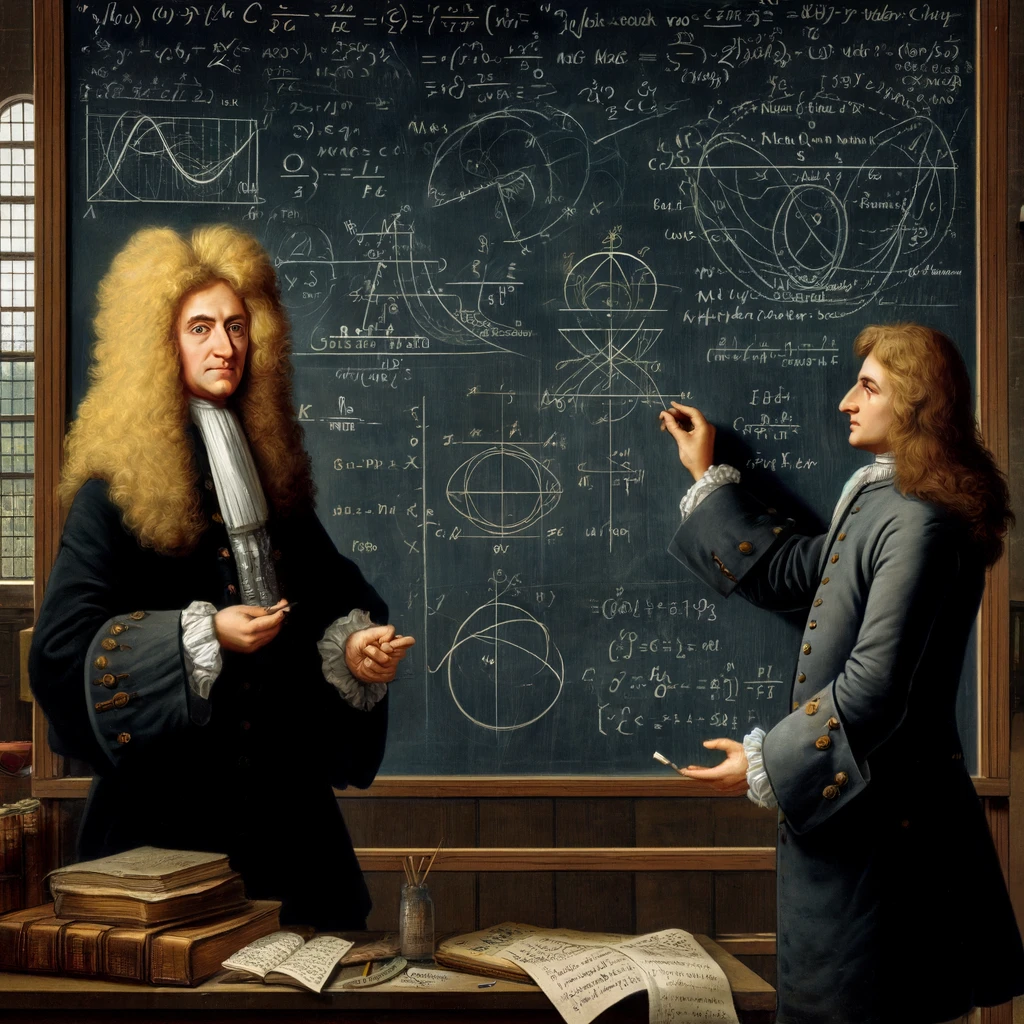
Abstract. I describe a simple historical thought experiment showing how we might have come to view the continuum hypothesis as a fundamental axiom, one necessary for mathematics, indispensable even for calculus.

See also this talk I gave on the topic at the University of Oslo:

  • How the continuum hypothesis could have been a fundamental axiom, Oslo
Slides-CH-could-have-been-fundamental-Hamkins-Oslo-June-2024-1Download

Share:

  • Click to share on X (Opens in new window) X
  • Click to share on Facebook (Opens in new window) Facebook
  • Click to share on Reddit (Opens in new window) Reddit
  • Click to share on WhatsApp (Opens in new window) WhatsApp
  • Click to email a link to a friend (Opens in new window) Email
  • Click to print (Opens in new window) Print
  • More
  • Click to share on LinkedIn (Opens in new window) LinkedIn
  • Click to share on Tumblr (Opens in new window) Tumblr
  • Click to share on Pocket (Opens in new window) Pocket
  • Click to share on Pinterest (Opens in new window) Pinterest
Posted in Publications | Tagged categoricity, CH, continuum hypothesis, hyperreal numbers, Leibniz, Newton, thought experiment | 27 Replies

Infinitely More

Proof and the Art of Mathematics, MIT Press, 2020

Buy Me a Coffee

Recent Comments

  • Nicholas Swenson on Did Turing prove the undecidability of the halting problem?
  • Jerry on Draw an infinite chessboard in perspective, using straightedge only
  • Joel David Hamkins on Draw an infinite chessboard in perspective, using straightedge only
  • Jerry on Draw an infinite chessboard in perspective, using straightedge only
  • Joel David Hamkins on Did Turing ever halt? HPS Colloquium, Notre Dame, October 2025

JDH on Twitter

My Tweets

RSS Mathoverflow activity

  • Comment by Joel David Hamkins on Consistency of a measure witnessing a strengthening of Freiling’s axiom of symmetry
    The title asks for a formal justification of Freiling's axiom, but since he gives a ZFC proof (actually due to Sierpinski) that AS is equivalent to ¬CH, I'm not sure what more formalization would be needed. In the body of the question, however, you ask whether certain technical properties about measures are consistent with ZFC, […]
  • Comment by Joel David Hamkins on How many ultrafilters on the free σ-complete BA on ℵ₀ generators?
    Perhaps it helps to point out that your algebra has an antichain of size continuum—the conjunctions of positive/negative literals of the generators.
  • Comment by Joel David Hamkins on Consistency of a measure witnessing a strengthening of Freiling’s axiom of symmetry
    The title of your question doesn't seem to match the question(s) that you actually ask.
  • Comment by Joel David Hamkins on How to understand non-standard halting times?
    Just because PA is actually sound it doesn't follow that every model of PA thinks that PA is sound, and indeed, I have explained why some don't.
  • Comment by Joel David Hamkins on How to understand non-standard halting times?
    Well, in my example M thinks PA is inconsistent, so it thinks PA can prove anything. It doesn't agree that PA is sound, even though it happens to think every standard axiom of PA is true. It has problematic nonstandard axioms of PA.
  • Comment by Joel David Hamkins on How to understand non-standard halting times?
    Yes, that is totally right. The operation at finite stages is absolute.
  • Comment by Joel David Hamkins on How to understand non-standard halting times?
    Having a code of a proof that $p$ halts does not generally imply that one has a code of the halting computation. For example, in a model of PA+¬Con(PA), there will be codes of proofs that every single program halts, even though many of them do not, even in that model.
  • Answer by Joel David Hamkins for How to understand non-standard halting times?
    One of the key ideas underlying so much of our understanding of models of arithmetic, including the incompleteness theorems and so much more, is the arithmetization phenomenon. Arithmetization shows that essentially any finite combinatorial concept can be expressed using only the very basic language of arithmetic, with addition and multiplication only. One commonly takes the […]

Meta

  • Log in
  • Entries feed
  • Comments feed
  • WordPress.org

Subscribe to receive update notifications by email.

Tags

  • absoluteness
  • bi-interpretation
  • buttons+switches
  • CH
  • chess
  • computability
  • continuum hypothesis
  • countable models
  • definability
  • determinacy
  • elementary embeddings
  • forcing
  • forcing axioms
  • games
  • GBC
  • generic multiverse
  • geology
  • HOD
  • indestructibility
  • infinitary computability
  • infinite chess
  • infinite games
  • ITTMs
  • kids
  • KM
  • large cardinals
  • Leibnizian models
  • maximality principle
  • modal logic
  • models of PA
  • multiverse
  • Notre Dame
  • open games
  • Oxford
  • philosophy of mathematics
  • pluralism
  • pointwise definable
  • potentialism
  • PSC-CUNY
  • supercompact
  • truth
  • universal algorithm
  • universal definition
  • universal program
  • Victoria Gitman
Proudly powered by WordPress